
 FR
FR  EN
EN  DE
DE  ES
ES 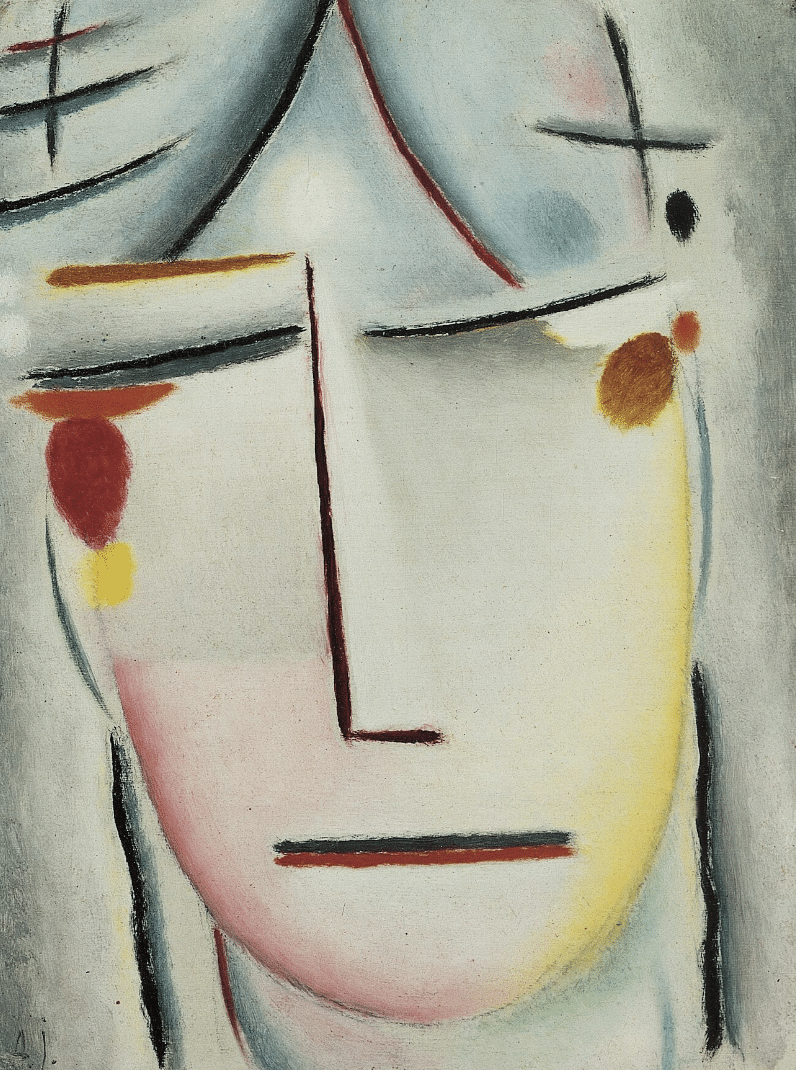
“ Le visage du Sauveur : Lumière des étoiles ” (1921) d’Alexei Jawlensky
Chers amis :
Voici un bref compte rendu de Fred Dennehy, membre de la Section, concernant une initiative internationale visant à rééditer des ouvrages importants de Georg Kühlewind pour notre XXIe siècle. Les membres du conseil de direction de la Section Fred Dennehy et Robert McKay Nous travaillons sur ce projet en collaboration avec d’autres amis et membres de la Section, tant sur ce continent qu’ailleurs. Bien que Georg Kühlewind ait été un maître très important pour de nombreux membres chevronnés de la Section, son œuvre considérable n’a pas fait l’objet, ces derniers temps, de hommages ni de discussions lors de nos réunions ou conférences de Section. Il est réconfortant d’apprendre cette initiative passionnante de la Section, et j’espère que l’idée d’un colloque consacré aux œuvres de Georg Kühlewind pourra se concrétiser avec succès en Amérique du Nord ou ailleurs.
Rapport de Fred Dennehy sur l'initiative :
“ Nous avons mis sur pied un groupe chargé de collecter des fonds pour la publication d’ouvrages écrits par et consacrés à Georg Kühlewind, et d'organiser un colloque ou une conférence sur son travail. Les personnes intéressées sont invitées à me contacter ou à contacter Rob McKay. ” [Note de la rédaction : pour des raisons de confidentialité et de sécurité, je n’ai pas communiqué les adresses e-mail de Fred ni de Rob. Les membres actifs de la section savent comment les contacter ; sinon, ils peuvent s’adresser directement à moi s’ils souhaitent obtenir les coordonnées de Fred ou de Rob.]
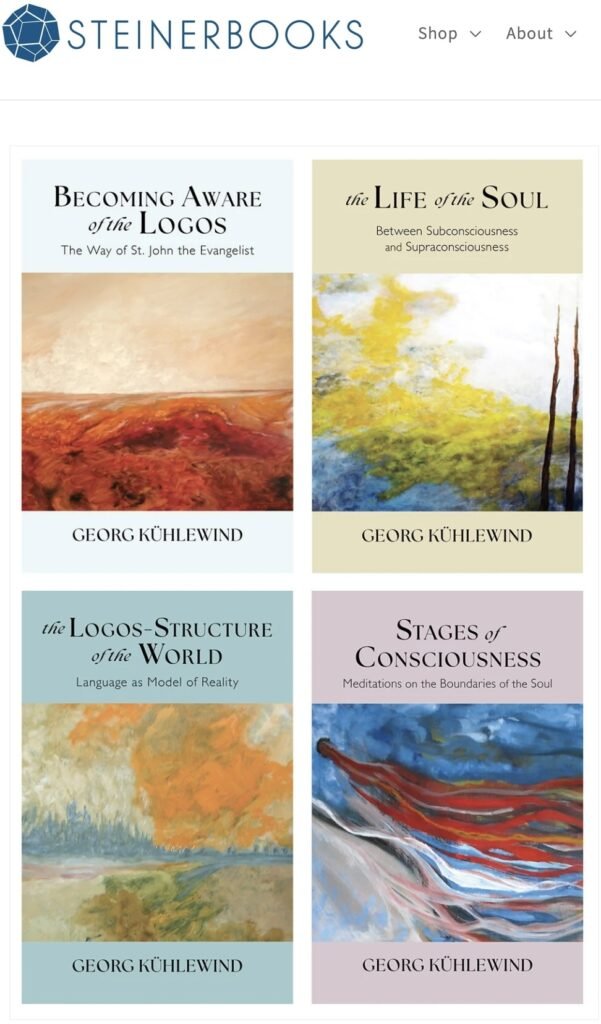
“ Nous avons organisé la publication d'une deuxième édition de quatre de ses ouvrages ‘ fondamentaux ’ : Les étapes de la conscience ; La vie de l'âme ; Prendre conscience du Logos ; et La structure logos du monde. Ils sont désormais disponibles chez SteinerBooks. Nous avons également fait traduire et publier la biographie de Georg écrite par Laszlo Boszormenyi, ainsi que Noël, un livre de Noël écrit par Georg. À long terme, nous aimerions publier l'intégralité de l'œuvre non encore traduite de Georg. Nous entamons actuellement les démarches pour organiser une ” La conférence Kuhlewind, qui se tiendra quelque part en Amérique du Nord en 2027 ou 2028. »
Actualités connexes… .
C'est l'occasion de rappeler à tout le monde que Fred Dennehy fera une présentation sur Owen Barfield lors d'une de nos réunions Zoom de section prévues en janvier 2027. Consultez le calendrier des réunions de la section pour connaître la date. Fred a présenté Owen Barfield lors de nos réunions de section ces dernières années, et son exposé de 2021, consacré à la vie et à la philosophie de Barfield, figure parmi les vidéos les plus populaires sur La chaîne YouTube « The Literary Arts ». Pour ceux qui l'auraient manqué, le voici :
“ Owen Barfield : L’âme d’un mot ” / Conférence de Fred Dennehy. Cliquez ici pour découvrir d'autres événements organisés par Barfield lors des réunions de section.
Outre son expertise concernant les œuvres de Georg Kühlewind et Owen Barfield, Fred est également un comédien et dramaturge shakespearien accompli. Vous pouvez retrouver ses précédentes interventions dans cette rubrique sur Le processus de l'acteur et William Shakespeare en cliquant sur les mots surlignés dans cette phrase.
Georg Kühlewind (1924-2006)
Chimiste, professeur de méditation et disciple du Logos
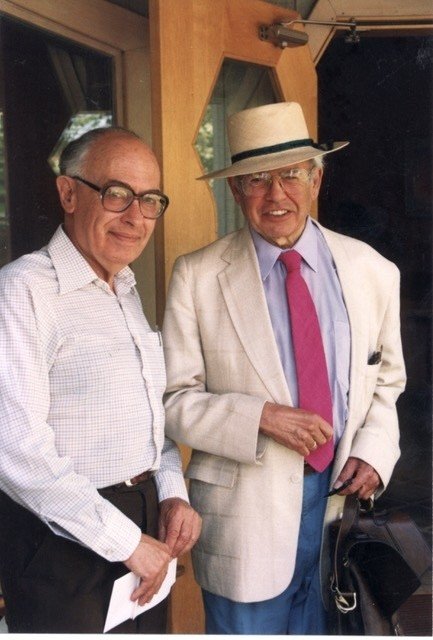
Georg Kühlewind en compagnie de René Querido à l'entrée du Philadelphia Hall, au Rudolf Steiner College, à Fair Oaks, en Californie, à la fin du XXe siècle. [Photo d'époque fournie par Gayle Davis, membre du conseil de direction de la section et ancienne présidente du collège.]
Une vie au-delà des frontières
Les lecteurs qui connaissent Rudolf Steiner… Philosophie de la liberté On se souviendra de ce moment, au troisième chapitre, où la pensée se met à s’observer elle-même. Rudolf Steiner qualifie cela d’état exceptionnel, car dans la vie quotidienne, nous n’observons jamais notre pensée pendant que nous pensons. Georg Kühlewind a passé un demi-siècle à transformer cet état exceptionnel en une pratique. Il en a fait quelque chose qui peut s’apprendre, s’approfondir et se partager.
Kühlewind est né sous le nom de György Székely à Budapest le 6 mars 1924, au sein d’une famille juive laïque. Adolescent, il s'intéressa à la psychanalyse, à Jung et à l'histoire des religions ; à dix-sept ans, il suivit les cours du mythologue Karl Kerényi. En 1944, après avoir été affecté aux travaux forcés, il fut déporté vers des camps de concentration allemands, notamment celui de Buchenwald. Il fut libéré par les troupes américaines en avril 1945.
Il a découvert l'anthroposophie à l'âge de dix-huit ans. Après la guerre, il s'y est replongé grâce à l'œuvre de Steiner Vérité et science et La conception du monde selon Goethe. Puis vint la rencontre décisive : les conférences de Steiner à Hambourg en 1908 sur l’Évangile selon Jean. Pendant trente ans, Kühlewind enseigna et mena des recherches en chimie physique à l’Université technique de Budapest. Sous le régime communiste, l’anthroposophie ne pouvant être pratiquée ouvertement en Hongrie, il écrivait en allemand sous le nom de “ Kühlewind ”. Au cours des dernières décennies de sa vie, il a donné de nombreuses conférences en Europe et en Amérique. Il est décédé à Budapest le 15 janvier 2006.
Penser au présent
Au cœur de l’œuvre de Kühlewind se trouve une distinction bien connue issue de La philosophie de la liberté: la pensée achevée face à l'acte vivant de penser. La conscience ordinaire, affirmait-il, vit au passé. Elle s'occupe de ce qui a déjà été pensé, ressenti ou perçu. L'activité qui produit ces résultats lui reste cachée.
Kühlewind a identifié la clé de cette activité dans l’attention, qu’il considérait comme l’expression la plus directe du “ Je ”. Ses exercices de concentration, de perception et de méditation visent tous à renforcer et à purifier l’attention. Le méditant apprend à s’attarder dans l’instant présent, avant qu’une pensée ne se cristallise en un résultat. Ce que Steiner décrivait comme la « pensée vivante » devient, entre les mains de Kühlewind, une voie de pratique concrète dont il a longuement discuté avec de nombreuses personnes à la fin du XXe siècle. En Californie du Nord, il a travaillé en étroite collaboration avec Friedemann Schwarzkopf et s’est rendu à plusieurs reprises au Rudolf Steiner College ainsi qu’au sein de la communauté. Les enseignants Waldorf se souviennent peut-être des réunions du corps enseignant auxquelles il assistait en tant que conseiller chevronné et sage.
Prendre conscience du Logos
L'ouvrage de Kühlewind le plus connu en anglais est sans doute Prendre conscience du Logos : la voie de saint Jean l’Évangéliste. Dans cet ouvrage, Kühlewind interprète le prologue de l'Évangile selon Jean comme une description de la conscience.
Au commencement était le Verbe… et le Verbe était la vraie lumière, qui éclaire tout homme venant au monde.
Comme l’a fait remarquer Kühlewind, lorsque nous comprenons une phrase, nous ne construisons pas le sens à partir des sons. Nous saisissons d’abord le sens, et les mots ne font que le désigner. Tout acte de compréhension repose donc sur une puissance qui donne du sens et qui précède le langage. Cette puissance, c’est le Logos, la lumière présente dans toute connaissance humaine.
C'est là que son épistémologie rejoint la christologie de Steiner. Dans les conférences sur l'Évangile selon Jean, Steiner présente le Christ comme le Logos qui rend possible le “ JE SUIS ” humain. Kühlewind transpose cette idée dans le domaine de l’expérience intérieure. L’acte de pensée libre et conscient de soi qui La philosophie de la liberté On pourrait dire que ce qu'il décrit, c'est le moment où le Logos prend conscience de lui-même chez l'être humain. Dans ce contexte, la liberté et l'expérience du Logos s'avèrent être les deux facettes d'un même événement. Kühlewind a approfondi ce thème dans La structure logos du monde, qui considère le langage comme un modèle permettant de comprendre la réalité elle-même.
Des présentations de section sont-elles prévues en 2027 . . . ?
Comme je l’ai dit, à ma connaissance, la Section n’a jamais abordé de manière officielle les contributions de Georg Kühlewind aux arts littéraires et aux sciences humaines — non pas parce que nous ne les apprécions pas à leur juste valeur, mais simplement parce que nous n’avons jamais eu l’occasion de le faire avec nos amis et nos membres. Désormais, grâce à la bonne nouvelle annoncée par Fred et Rob, nos amis et nos membres pourront peut-être contribuer à ce regain d’intérêt pour cet important commentateur et philosophe !
10.05.26