
 DE
 EN
 FR
 ES
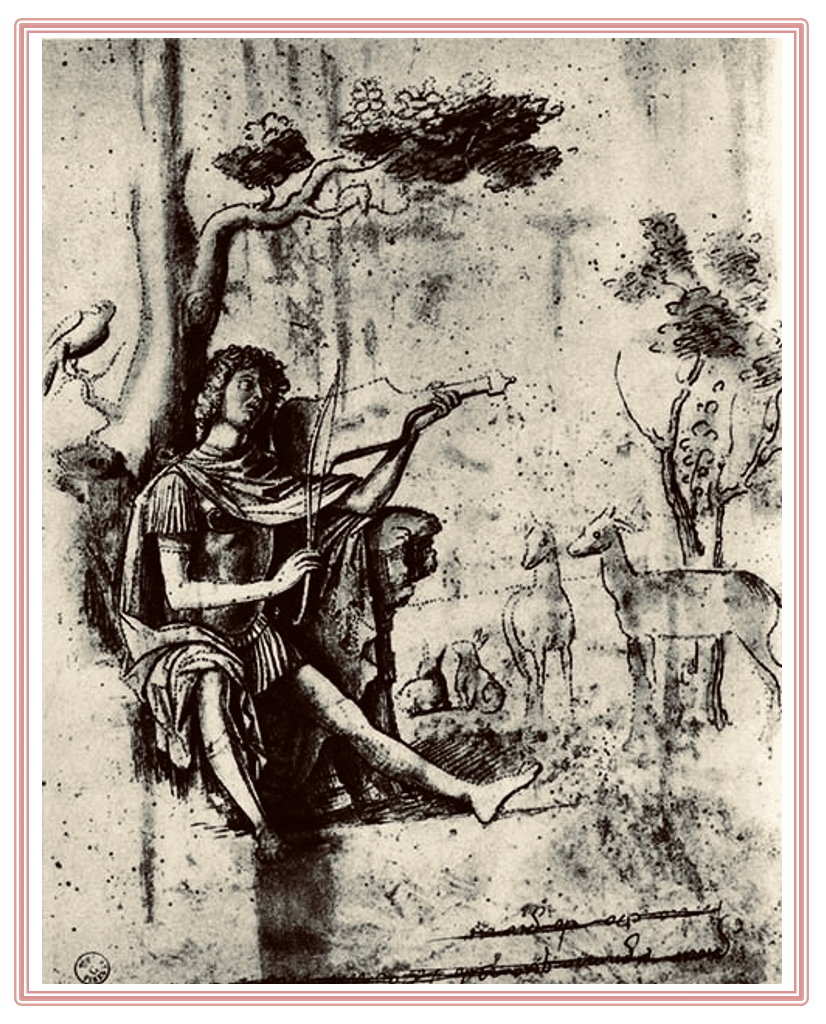
Orpheus
Liebe Freunde,
This essay, originally in German, appeared in the Easter 2021 Rilke issue of STIL magazine. STIL is the quarterly publication of the Section for Literary Arts & Humanities of the School for Spiritual Science at the Goetheanum. This essay should be read in tandem with viewing the video performances on poems from Sonnets to Orpheus, which you can find on his website in the section of the website called The Rilke Project.
I am posting this translation as supplementary material for the October – November 2026 ASA event: Dying & Becoming: Orphic Wisdom in the Poetry of Rilke & Novalis”
“Hearing” Rilke
Aufsatz von Bruce Donehower
In recent decades Rainer Maria Rilke has become one of the most popular poets in America. Many American poets have tried their hand at translating Rilke’s best-selling verse. Translated editions of his letters turn up among the inspirational and New Age spirituality titles. This most European of all modernist poets — a poet firmly rooted in a secular humanist literary tradition that begins with Petrarch — has found a home and a fresh voice in the American idiom of today.
Rilke’s highly personal shaping of the German language is challenging even in its own context. As with all poetry, and with Rilke above all, much of the meaning lies in the music of the language, in the magic of sound. Rilke also often works in quite strict poetic forms such as the sonnet, where the rhyme scheme plays a demanding and decisive role. In translation this often means that either the music or the sense must suffer to some degree.
Die ungeborene Stille
In many respects Rilke’s poetry tries to cross the boundaries of language and point us toward a place of unborn silence. And such silence, as anyone may notice these days, is a rare friend indeed. The many “distances” that lie between our hurried personalities and such a silence feel enormous. One of the strengths of Rilke’s verse — and perhaps one reason it survives the process of translation so well, and “speaks” so intimately to strangers in a foreign tongue — lies, in my view, in this poetry’s closeness to silence. And, by extension, to death. Rilke is a poet whose words lead back to a “fruitful darkness” — a phrase the American Zen roshi Joan Halifax used as the title of one of her books. The phrase is meant to point us toward silence as the ground of being: a silence that precedes our coming into the world and our going out of it.
Many readers, including those who love Rilke in translation and know him only in that form, experience his poetry as a spiritual gift. Through reading Rilke, they discover themselves — that is, they come to an awareness of spirit and beauty, much like the experience Plato describes in the Phaedo: they sense a larger sense of breath; they grow wings; they find the questions they knew but had forgotten. These wings of the soul feed on the silence that surrounds and inhabits Rilke’s poems and letters. Many readers feel it as a sacred or spiritual silence, yet at the same time it is, wondrously, a silence very much of this embodied world. That is, it is not the holy silence of some imagined holy place, metaphysically or “spiritually remote” paradise far from our earth. It is as deeply personal and authentic as breathing in or breathing out.
Here’s an example. I like to quote this poem by Rilke whenever I can, as I did recently in 2026 for ASA event Dying & Becoming: Orphic Wisdom in the Poetry of Rilke & Novalis, and I refer you to that video for a closer discussion of this sonnet.
Breath, you invisible poem!
Back and forth, back and forth,
exchanging in and out
world space and Being.
Balance of this
balance of that
in which I happen.
Wave on waters
of what I am;
the perfect amount
of every possible ocean—
you have it all!
How many worlds within worlds
are inside me?
The many winds are like my son.
Air, do you know me?
So full of many places that once were mine,
you slippery rind!
Roundness and leaf of my words . . .
(Sonnets to Orpheus, Part II, Sonnet 1) (Translation: Bruce Donehower; see The Rilke Project)
Orpheus Sings!
Many readers find that the Sonette auf Orpheus surprise them, just as they surprised Rilke in 1922. This cycle of fifty-five sonnets, written down in a rush of inspiration, becomes even more surprising when we consider its intimate closeness to the Duino-Elegien. We know the story quite well: Rilke’s ten years of wandering and waiting that preceded the sonnets and the completion of the Elegies in the tower of Muzot. Though a great deal of beautiful poetry did come into being in those ten years, Rilke felt the decade to be barren. He endured it. He waited. Much like a prophet of old, Rilke lived those years in expectation of a voice. The Elegies famously begin with such a voice, which he first heard in the winter of 1911–12 at Duino, the castle on the cliffs above the Adriatic. Here is the famous description of that moment when the silence spoke. It comes from Marie von Thurn und Taxis.
“Outside a violent bora was blowing, but the sun was shining and the sea gleamed blue, as if spun over with silver. Rilke climbed down to the bastions, which lay toward the sea, east and west, joined by a narrow path at the foot of the castle. There the rocks fall steeply, some two hundred feet, into the sea. Rilke paced up and down, wholly lost in thought, for the answer to the letter weighed on him greatly. Then all at once, in the midst of his brooding, he stopped . . . for it seemed to him as though a voice had called to him in the roaring of the storm: ‘Who, if I cried out, would hear me among the angelic orders? . . .’ He stood still, listening. ‘What is that?’ he whispered under his breath . . . ‘What is it that is coming?’ He took the notebook he always carried with him and wrote. . . .”1
Such words sound mystical, and mysticism has become a much-discredited and strenuously questioned word — as perhaps it should be, given our historical context. Even those who call themselves practicing meditators shy away nervously from the term “mystical” these days. The present-day rhetoric of meditation has grown more attentive to technical terminology; it spiritually scientific, and in a certain sense it is more practical and utilitarian as a result. It has gained much through this application — all to the good. But it has also lost something. From a literary point of view, what was “lost” finds its home in that broad category of literature we call Romantic — likewise a largely discredited, if not ridiculed, term. Rilke has an affinity with Novalis, for example; one might well argue that they both share a “mystical” affinity — give birth to a a poetry of silence, darkness, darkness, love and death. Clever readers might smile. But while Rilke certainly dwells in modernity, his spirited “mystical” moments seem born of older ages. I quote from Experience (Erlebnis), written in 1912.
“It might have been little more than a year ago that something strange befell him in the castle garden, which ran fairly steeply down the slope to the sea. Walking up and down with a book, as was his habit, he had happened to lean into the shoulder-high fork of a shrub-like tree, and at once he felt so pleasantly supported in this posture, so amply at rest, that he stayed there without reading, wholly taken into nature, in an almost unconscious gazing. Little by little his attention woke to a feeling he had never known: it was as if almost imperceptible vibrations were passing into him from the interior of the tree . . . All the same, intent as always on giving himself an account of even the faintest things, he asked himself urgently what was happening to him, and almost at once found an expression that satisfied him, saying it half aloud to himself: he had come to the other side of nature.”2
Tuning to Orpheus
Rilke experienced the coming of the sonnets and the completion of the Elegies, in three weeks of February 1922, as a spiritual event. In the silence of his self-imposed isolation at Muzot these sonnets happened, as we know, in a stormy rush of activity, written down one after another with almost no correction. Rilke called them a “dictation” (Sendung). The “hearing” of these sonnets had been preceded by long years of patience, practice, discipline and attunement. I use the word attunement here in its musical sense.
Music Comes Out of Silence is the title of a book by the pianist András Schiff. It is an apt expression for the time in which the sonnets were written. Music comes out of silence, but musical expression rests on a fervor of discipline and on a sensitive patience and perseverance of steadfast craft. By the moment of Rilke’s attunement to Orpheus, the preceding ten years had disciplined his spirit for just such an attunement. The stations along Rilke’s way — his translations of Michelangelo’s sonnets and of Elizabeth Barrett Browning’s Sonnets from the Portuguese, his long engagement with Petrarch, Petrarch’s ascent of Mont Ventoux — all of this lay close to hand, for example, when “the sonnets spoke.” But it was the silence arising out of the fruitful darkness of isolation that held that voice and allowed it to sing,
This revaluing of silence is a very important experience for many readers of Rilke today — especially, one might argue, in our age of universal chatter. I believe it is the experience that makes Rilke’s poetry in translation so irresistible to so many readers. It comes, I think, in addition to the pleasure of the many very fine English translations, each of which brings us closer to Rilke’s meanings and his poetic world as we view them through the sensibility of a poet-translator.
But no translation, however masterly, can render the unique word-music and word-magic of Rilke’s original German. The sonnet form heightens this musical quality still further. The sonnet, which arose in the West through a long tradition, has proved robust for many subjects, but above all it often serves as a love poem of praise and personal reflection. Its rhyme, its stanza structure and its meter lend themselves very well to musical treatment. In many ways it is related to the sonata, a form whose extreme limits make extreme artistic freedom possible, paradoxically. While the Elegies storm the heights of the metaphysical, the sonnets praise and sing, as befits the transparency of music. Praise (Rühmung) is of course one of the leitmotifs of the sonnets. In an earlier poem Rilke spoke of the poet as one who rhymes and praises, above all. Consider these lines from the following untitled poem, written at Muzot about two months before the sonnets.
Sag mir, Dichter, was tust du?
— “I praise.”
But the deadly and the monstrous . . . how do you endure it?
— “I praise.”
But the unnamed, the nameless . . . poet, how do you conjure it?
— “I praise.”
What gives you the right to speak Truth in masks and disguises?
— “I praise.”
And the silence. . . the days ever restless that befriend you like star and storm? How can that be?
–“because I praise.”
(Sämtliche Werke II, 249; December 20, 1921) (Translation by Bruce Donehower)
There! A Tree Rising.
And now, with the previous poem in mind and ear, listen once more to Part I, Sonnet 8 of the Orpheus sequence.
“Only in the realm of praising can lament go forth,
the nymph of the weeping spring,
watchful of our defeat, that it may shine clear on the rock
that bears the gate and the altars.
— See, around her calm shoulders
comes soon the feeling that she is the youngest
of the siblings of the heart.
Jubilation knows, and yearning stands steadfast —
only lament frets it yet; with maiden fingers
she counts the old evils all night long.
But suddenly, weird and unpracticed,
she lifts into the sky,
unclouded by her breath,
our voice, as figuration of the stars.” (Translation by Bruce Donehower; see The Rilke Project)
Rilke’s contemporary, the poet Hugo von Hofmannsthal, also spoke of this problem of praise, which, as Hamlet famously lamented, is a problem of “words, words, words.” Hofmannsthal voiced this lament in his story A Letter(the “Chandos Letter”)3, in whose background Shakespeare, that magus prodigal with words, appears. Here is the dilemma as Hofmannsthal framed it in early-twentieth-century Vienna:
“For me everything fell apart into pieces, the pieces again into pieces, and nothing would let itself be encompassed by a concept any longer. Single words swam about me; they congealed into eyes that stared at me and into which I in turn must stare: they are whirlpools, which make me dizzy when I look down into them, which turn without ceasing, and through which one passes into the void.”
This void, however, is not silence. The void is nothingness. Nothingness and silence are not the same. Nothingness can be experienced as a death of language, as a sterile endgame — but that experience is not death in the spiritual sense in which Novalis and Rilke use the word. Nothingness is an experience of aridity and coldness. The intimacy of silence and death in Novalis’s poetry, for example in the Hymnen an die Nacht, is a wholly different order of spiritual experience. In this respect Rilke stands close to Novalis. Each poet, Novalis as well as Rilke, found a center in the Orphic myth. It is this inner centering in silence that paradoxically gives birth to song and builds that “temple in the ear” with which the sonnet cycle begins. The tree that rises so suddenly — that is so suddenly “there” — surely resonates with the Cross. It is well to remember that Orpheus and the Redeemer often exchanged roles in cultic or theatrical ways — in the classical world of early Christian era, they often confusing exchanged identities. In a purely poetic sense they form shifting mythic identities, as many inscriptions and talismans of the ancient world suggest.
Rilke had strong reservations about the Christian religion, based on what he perceived as Christianity’s antagonism toward, and flight from, our embodied world. He expressed these reservations in many letters — for instance in the Letter from a Young Worker, written at the time of the sonnets — and elsewhere. But the sonnets themselves are free of theological polemic. They are more primal, more musical and pure. “O pure transcendence! O Orpheus sings!” In these sonnets Rilke’s essential gesture is one of praise and transformation — “sign and change” (Wink und Wandlung), as he says at the very start, in Sonnet 1. Music always comes and goes in one and the same moment of time; it hovers. (Schweben, to hover, was one of Novalis’s favorite words.) Music must always transform, die and become again in order to be what it is. It is always on the way: “for staying is nowhere.”
Dying & Becoming
Homelessness is a characteristic experience on this path of dying and becoming, is it not? Rilke, as I said, lived his life as a wanderer. It speaks for the character of his poetic discipline that he could endure this. I do not want to romanticize it too much. The homelessness I am speaking of (a term that also carries great weight in twentieth-century philosophical rhetoric) is an admitted poverty of spirit that honestly acknowledges things as they are, that recognizes a patience of sitting and waiting. Or, as the current jargon of the American Zen tradition puts it with regard to meditation: the hopeful discipline “to sit down and shut up.” Such patience is a disciplined poverty of spirit that listens with respect to being. It is a question, or an expectation, or an attitude of wonder or astonishment that anything “is” at all. Some have argued that this attitude of wonder and astonishment is the founding moment of philosophy, its essential mood.
Spring has returned. The earth
ist wie ein Kind, das etwas Poesie kennt;
eine ganze Menge, wirklich. Eine ganze Menge! Nörgler, freut euch!
Sie können Ihr Spielzeug behalten.
“Schone die Rute und verderbe das Kind”.”
Diese silbernen Haare im Bart des alten Mannes -
LOL! Unbezahlbar!
Wenn der Test nun die Frage aufwirft: Grün oder Blau?
Sie kann es schaffen! Sie kann es!
O glückliche Erde, endlich frei!
Viel Spaß mit den Kindern.
Wir knutschen dich ab, du dumme Erde.
Der Dümmste gewinnt.
“O what the Teacher doth teacheth!” – the Many,
in winzigen, langwierigen Wurzeln und korpuskularen Stämmen... .
She sings! She sings!
(Sonnets to Orpheus, Part I, Sonnet 21) (Translation by Bruce Donehower; see The Rilke Project)
Poetry & Music / The Rilke Project
I titled this essay “Hearing” Rilke — as opposed to, say, “Reading Rilke” or “Writing Rilke” or “Translating Rilke” — because I responded to the Sonette auf Orpheus above all as a musician. I play and compose music for the classical guitar. What struck me first was Rilke’s musical handling of the German language — more than any philosophies or literary histories hidden in the verses. When I tried to find a similar musical experience in the translated poems, I was almost always somewhat disappointed and unsatisfied — not always, but often. I began to wonder how I might carry my experience of Rilke’s original musical language over to the classical guitar, and so I made some attempts to “translate” the sonnets in this way. But of course the words must be heard as well. I knew, though, that I wanted to recite these words, not sing them. That was very clear from the start. I felt that singing the verses would add another architecture, and I wanted to stay within Rilke’s “shelter . . . whose doorposts tremble.” I don’t self-identify as a composer, but I am a poet, and I found my familiarity with writing poems very helpful for this musical task. The two worlds of my artistic work, poetry and music, came together — under the sign of Orpheus, one might say..
For many years my wife and I, as part of our work in the Section for the Literary Arts and Humanities, have hosted what we call “New Moon Salons.” These salons are intimate gatherings of friends in our home, rounded out with food and conversation. We have tried to hold them several times a year, and last year we even held them on Zoom. The salons often include poetry and music. I wanted to share my Rilke experiments with my salon friends, but there was a problem. Few of my salon audience understand enough German to follow the recited text in performance. So they had only half the experience. On the one hand I was glad of this, because, as I said, I mainly wanted to bring out the unique musicality of Rilke’s German. On the other hand, most people also wanted an English translation in the program notes; they want to understand the meaning of the words, as with opera. To solve this problem, and to avoid copyright infringement in the performance videos I post, I was obliged to make original translations of the poems, so that my audience could at least grasp, in the program notes or the video posts, the English meaning of what my wife Marion was reciting. Without meaning to, then, I was thrown out onto the minefield of translation, that no-man’s-land of enormous risk. Yet I found that, forced in this way to make progress, I came closer to Rilke, at least on a personal level.
This solution seemed to work, at least for my listeners. The German recitation, together with music composed for each sonnet and played on classical guitar, let my friends who know no German hear the musicality of Rilke’s verse, and the program notes completed the experience. The guitar of course has Orphic connotations — the history of the guitar begins in ancient Greece — and I thought it suited the sonnets well. I do not claim that my music does more than satisfy my personal wish to get to know Rilke’s poetry better. But the performances point people to the experience of “hearing” that I consider so important in the sonnet cycle — and beyond it, to the mystery of the silence from which music comes. With this experience “in the ear,” the audience can read the translation, and from there they can begin their own journey with Rilke and Orpheus.
Finally, alongside these translations, I always include in the program notes quotations from Rilke’s letters and a short biography of the poet. And I always read the famous passage from the letter he wrote in 1925 to his Polish translator, Witold Hulewicz, where we find these sentences, with which I close this essay.
“We are the bees of the invisible. We ardently gather the honey of the visible, to store it up in the great golden hive of the invisible.”4
You can watch my performance videos of selected sonnets from the Sonette auf Orpheus at this link, or click the links the I provided for individual sonnets.
https://theliteraryarts.com/category/rilke-project/
Notes
- Rainer Maria Rilke, Briefwechsel mit Marie von Thurn und Taxis, 2 vols., Frankfurt, 1986. ↩
- Rainer Maria Rilke, Briefe aus Muzot 1921–1926, ed. Ruth Sieber-Rilke and Carl Sieber, Leipzig, 1940. ↩
- Hugo von Hofmannsthal, Gesammelte Werke, vol. II, ed. Herbert Steiner, Frankfurt, 1976. ↩
- Rainer Maria Rilke, Briefe aus Muzot 1921–1926, ed. Ruth Sieber-Rilke and Carl Sieber, Leipzig, 1940. ↩
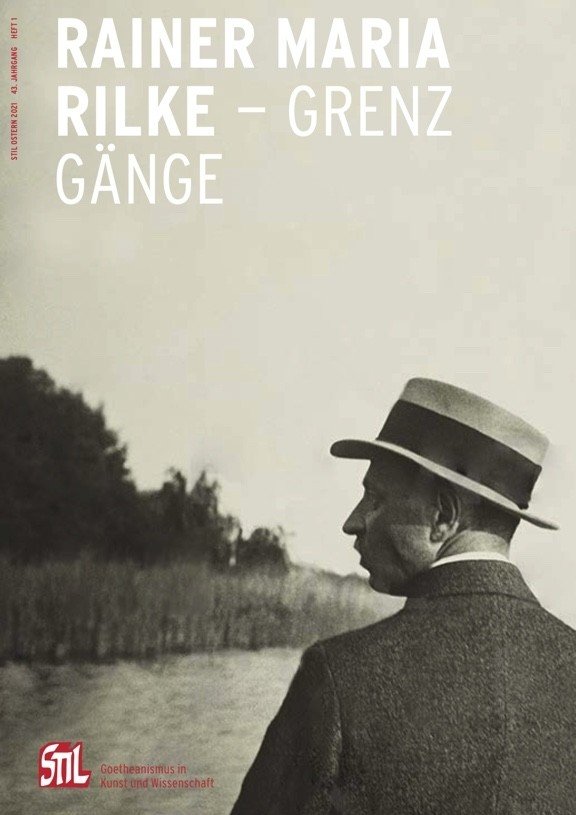
This essay first appeared in this issue of STIL magazine.
11.09.26