
 EN
EN  DE
DE  FR
FR  ES
ES 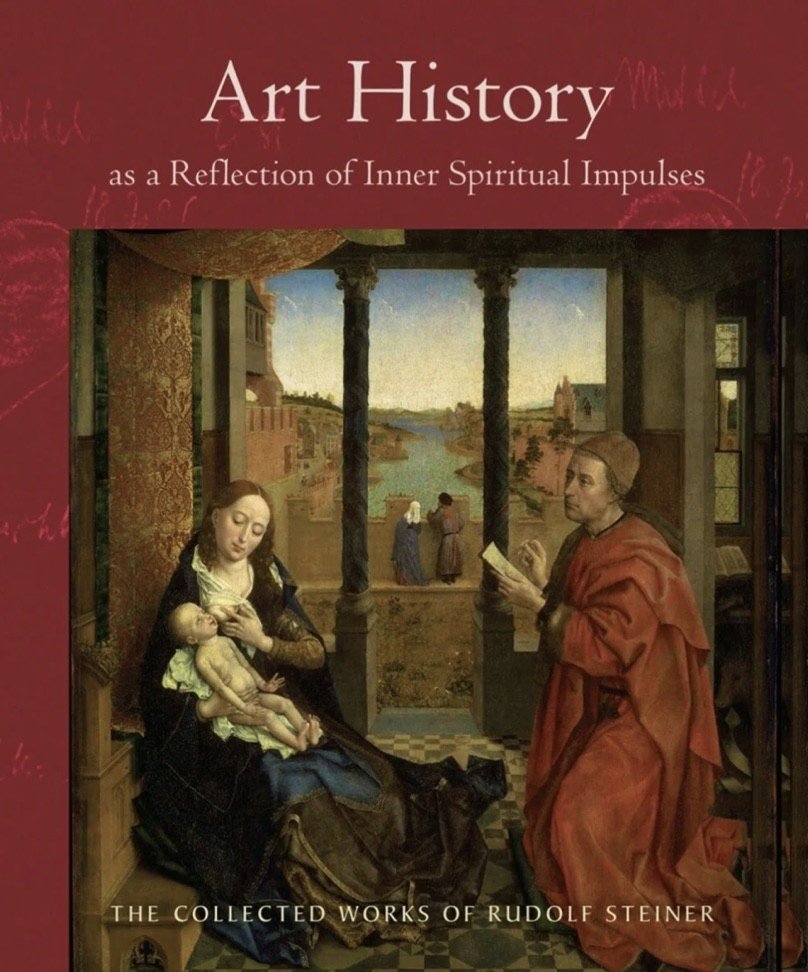
The Baby Maybe Needs Something?
Rudolf Steiner’s “First Address” / & Steps Toward a Poetry of Knowing
Dear Friends,
Although I wrote this meeting summary post four years ago in 2022 after a Section meeting where we celebrated Shakespeare’s birthday, the information is timely for our Section work recently as we turn our attention in 2026 to the Italian Renaissance, Renaissance Humanism, the secular humanist literary tradition, and Rudolf Steiner’s Art History Lectures (GA 292) that were give 1916-1917. Our Section has a special relationship to the theme of Beauty . . . Goodness and Truth. As I like to point out, if we translate the name of our Section word for word from the German, we are “The Section for the Beautiful Sciences.” In the English-speaking world, we have the less mysterious name “The Section for the Literary Arts & Humanities.” But our “mystery name” (dharma name, if you prefer) is “The Section for the Beautiful Sciences.” That is the name Rudolf Steiner gave us when we came into the world in the Carpentry Shed at the time of the famous Christmas Conference. At that moment of “hello, world!”, Rudolf Steiner called upon all present and future Society and Section friends and members “to re-enliven this branch of human creativity, which has been left in the corner, much to the detriment of civilization.”
But our name poses a great riddle — and it confuses many persons, when first they hear about it . . . and it even makes some folks object: “Why do we need a Section with such an awkward old-fashioned name? What is it even good for?”
But, as with every “mystery,” this riddle of a name leads forward to many insights and discoveries. Perhaps most importantly, it lead us to Raphael-Novalis.
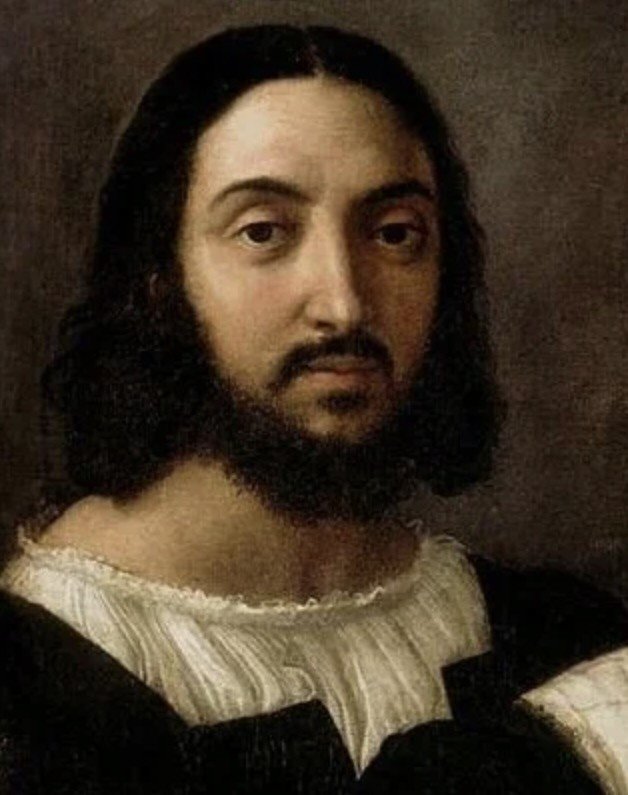
Rudolf Steiner liked to talk about Raphael-Novalis, as we all know. He highlighted Raphael-Novalis in his Last Address, much to the confusion and chagrin of the members in his audience. Taking a cue from the Signs of the Time, this year in our Section meetings we are deepening our knowledge of Raphael-Novalis (and thereby the mystery of our Section name) by taking up the “Raphael” side of Raphael-Novalis. This leads us to the Renaissance. We’ve made many brief forays into the era of the European Renaissance in past meetings, but this might be a longer expedition . . . perhaps long overdue.
As portal to this exploration, we are working with Rudolf Steiner’s art history lectures. This might appear odd or transgressive to those who have become accustomed to our long-standing meeting emphasis on poetry (creative writing) and literary criticism (academic stuff). But art history and “Beauty” are very much the concerns of our Section work. The previous two North American Section Conferences were also contributions to this path of our Section research, which I call “Steps Toward a Poetry of Knowing.”
Click here if you want to hear the Conference Keynote Addresses.
Click here if you prefer to read those Conference Keynote Addresses.
“Artists do not bring the divine to earth by letting it flow into the world; they elevate the worldly to the divine. Beauty is semblance because it conjures before our senses a reality which, as such, appears as an ideal world. Consider the What, but consider more thoroughly the How, because the How is what matters. The What remains bound to the sense-given, but the How reveals the ideal.”
— Rudolf Steiner
“The connection with the spirit breaks if it is not main-tained by Beauty. Beauty binds the ‘I’ to the body.”
— Rudolf Steiner
“. . . the vision of the human being will be directed to these times, to this artistic evolution; for it lets us gaze so deeply into the life and working of Piety, of Wisdom and of Love in the human soul, combined with the artistic fancy, striving to reproduce Nature with a fresh and open mind. It lies not in the mere imitation of Nature, but in the faculty of the human being, with all that he has found in his own soul, to discover again in Nature what is already there in her, akin to the inmost experiences of the human soul.”
— Rudolf Steiner, concluding words of Lecture One in the Art History Lecture Series (GA 292)
“But Is It Really His First Address?”
This title “First Address” refers to a statement by Rudolf Steiner’s biographer Christoph Lindenberg in volume 1 of his two volume biography in which Lindenberg underscored the importance of this first public lecture made available to us by Rudolf Steiner. (“Es ist der erste überhaupt von Steiner überlieferte Vortrag.” Vol 1, pg. 161). Lindenberg contextualizes the importance of this “first lecture” (1888) in respect to the more famous “Last Address” (1924).
Furthermore, if we take Rudolf Steiner at his word that his main mission was to bring a renewed teaching of reincarnation and karma, then this “First Address” of 1888 on the topic of Beauty assumes even greater importance — most especially for a Section that calls itself in German the Section for the “Beautiful Sciences.” Because of that importance, I’ll add a bit more information. I’m quoting Lindenberg :
After the lecture [Goethe as the Founder of a New Science of Aesthetics], the Cistercian professor Neumann approached Steiner and made a remark “which could not be understood other than that the man at this moment had a full understanding of a person of the present and of the relationship of this person of the present to his previous inarnation. And what he said about the connection of two earthly lives, that was right, was not wrong.” [Lindenberg quotes Steiner here.] As reported later by Steiner to [Friedrich] Ritellmeyer, [Steiner] was made aware of his former earthly life as from the outside.
It can therefore be assumed that Rudolf Steiner can be recognized in particular by the main idea of this lecture [Goethe as the Founder of a New Science of Aesthetics]. And in fact, the idea of this lecture, namely that all artistic creations emanate from the real and that this reality is then worked upon in such a way that it appears ideal, is an important life principle of Rudolf Steiner. He lived in the grasp of the tasks that reality brought to him. This principle is particularly encountered in social actions. He always starts from the people he is dealing with in reality. Again and again he starts from the questions that others ask him. He responds to others; whether these are Berlin workers or theosophists is not so important to him. Above all, however, he tries to promote people and group them in such a way that the real finally receives a spiritual splendor and begins to seem ideal. He lifted many of his students above themselves by trusting them and opening up opportunities for work.
— Christoph Lindenberg, from Rudolf Steiner, Eine Biographie, Vol. 1, pgs. 161-62

Alternatively, however, one might argue that the first “anthroposophical” address was rather the lecture on Goethe’s Fairytale of the Green Snakes and Beautiful Lily that Steiner gave to an audience of theosophists at Michaelmas, 1900. As we know, Steiner called Goethe’s Fairytale the “germinal seed of the anthroposophical movement.”
But, whether one turns to the right or to the left, so to speak, there stands Goethe! And at the end of it all, in the Last Address, there stands Novalis!
And with Novalis, Raphael.
What will we discover with Raphael-Novalis? If causes and conditions prove favorable, let’s find out!
“Who am I?”
“In the Anthroposophical Society we are fortunate to have a splendid representative of the Beautiful Sciences among us: Albert Steffen. Not only is he called to be the leader of the Section for the Beautiful Sciences, but also to re-enliven this branch of human creativity, which has been left in the corner, much to the detriment of civilization.”
— Rudolf Steiner; quoted by Heinz Matile in “Albert Steffen and the Beautiful Sciences” in the 2002 Yearbook of the Literary Arts and Humanities
Original April 22, 2002
Revised March 1, 2026